
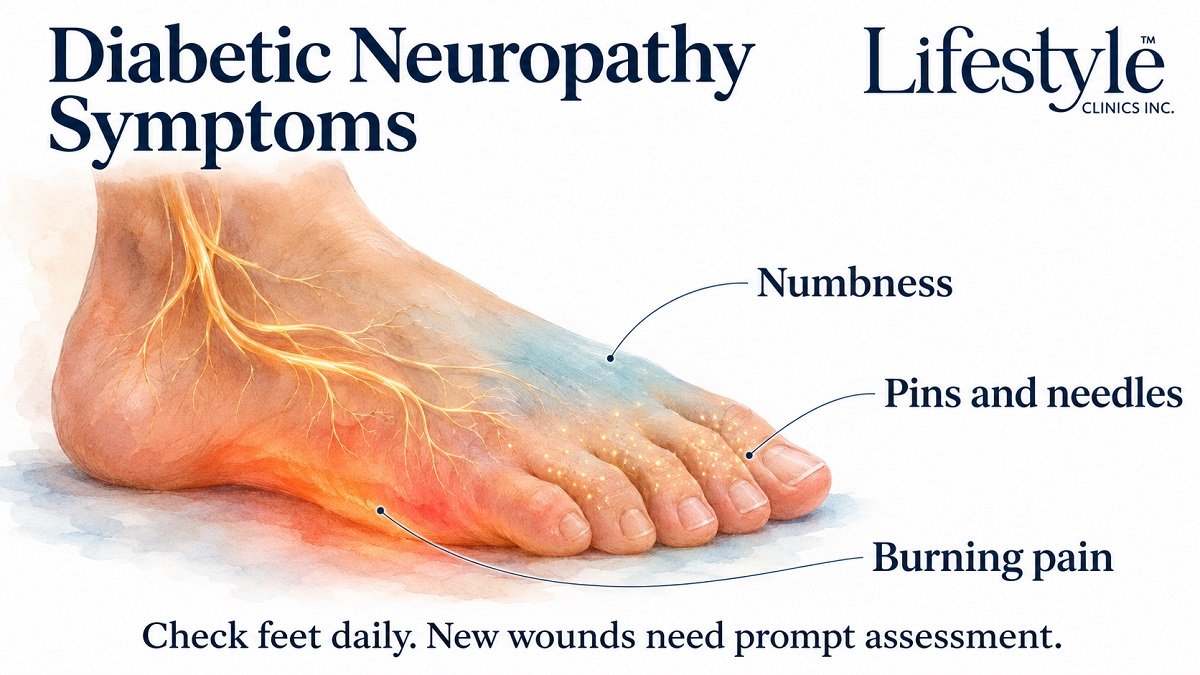
Diabetic Neuropathy Symptoms and Assessment of Nerve Pain and Numbness
Diabetic neuropathy symptoms may begin with burning soles, prickling toes or a patch of reduced feeling. For some people, the first concern is discomfort at bedtime. Others notice that their feet no longer register a small injury. Recognizing these changes matters because nerve damage can affect comfort, movement and the ability to detect harm. An examination is needed to establish what the symptoms mean.
Diabetes can injure different groups of nerves, so the condition does not produce one fixed pattern. Symptoms may involve the limbs or functions such as digestion and blood pressure regulation. Equally, having diabetes does not explain every new sensation automatically. Other causes sometimes coexist and deserve investigation.
For someone searching for diabetic neuropathy care near me, the immediate aim is an assessment that connects symptoms with clinical findings. LS Clinics considers diabetes within its wider work in endocrinology, lifestyle and metabolic health. Patients can discuss nerve related concerns during a consultation and confirm whether further investigations or specialist referral are appropriate.
How Diabetes Can Affect Nerve Function
Persistently elevated glucose can harm nerves and the small blood vessels supporting them. Blood fats and other health factors also influence risk. The resulting changes may interfere with signals carrying sensation, controlling muscles or regulating internal organs. Both type 1 and type 2 diabetes can be associated with neuropathy.
Duration of diabetes, glucose management, smoking and conditions such as high blood pressure can influence the likelihood of nerve problems. Symptoms alone cannot show how much damage exists. Some people have few noticeable complaints even when an examination identifies reduced sensation, which makes routine review valuable.
The most useful description includes where a symptom occurs, how it feels and whether it is changing. Note whether both feet are affected, whether discomfort travels upwards and whether weakness accompanies it. These details help the doctor distinguish patterns that need different investigations.
Recognizing Symptoms in the Feet and Legs
Burning and Tingling
Burning discomfort may feel like heat inside the foot even when the skin is not unusually warm. Tingling can resemble prickling, buzzing or repeated small shocks. These sensations often involve the toes and feet and may become more noticeable at night. Pain can interrupt sleep or make ordinary contact uncomfortable.
Describe the experience in your own words rather than trying to select a medical label. Explain whether it prevents sleep, changes your walking distance or makes shoes difficult to tolerate. A practical account helps the clinician judge the effect on daily life.
Numbness and Reduced Temperature Awareness
Reduced sensation can make it harder to recognize pressure, pain or changes in temperature. A person might discover a blister without remembering when it developed. This loss of warning sensation deserves attention even when there is no burning or obvious discomfort. Lack of pain does not establish that a foot is healthy.
Sensitivity to Light Contact
Some people experience pain from a bedsheet, sock or gentle touch that would normally feel harmless. Increased sensitivity can occur alongside areas of numbness. Tell the doctor about both experiences, including whether the affected area is spreading. Avoid repeatedly pressing or exposing the skin to heat to test it yourself.
Weakness and Changes in Balance
Nerve problems can affect muscle control and awareness of foot position. Possible changes include unsteadiness, difficulty lifting the front of the foot or reduced confidence on stairs. New weakness needs assessment, especially when it develops quickly or affects one side much more than the other. Falls and near misses are relevant clinical information.
Symptoms Involving Internal Body Functions
Autonomic nerves help regulate processes that usually happen without conscious effort. When these nerves are affected, diabetic neuropathy symptoms can extend beyond the feet. However, digestive, urinary or blood pressure symptoms have several possible explanations, so they require their own assessment.
Dizziness and Changes in Sweating
Feeling faint after standing can occur when blood pressure regulation is affected. Unusual sweating, including excessive sweating during meals or reduced sweating in some areas, can also occur. Describe the timing and bring a medicine list, because dehydration, prescriptions and other conditions may contribute to similar complaints.
Digestive Difficulties
Feeling full after a small meal, persistent nausea or vomiting may prompt assessment for delayed stomach emptying, called gastroparesis. Diabetes is one possible cause. Symptoms cannot confirm it independently, and tests may be needed to examine stomach emptying or exclude another explanation. Report difficulties that interfere with eating or glucose management.
Bladder and Sexual Changes
Difficulty emptying the bladder, leakage or altered awareness of bladder fullness can accompany nerve dysfunction. Erectile difficulties, vaginal dryness or reduced sexual sensation may also need discussion. These concerns can involve circulation, medicines, hormonal changes or other conditions as well as neuropathy. A private clinical conversation helps direct the assessment.
Reduced Awareness of Low Glucose
Autonomic dysfunction may reduce the usual warning symptoms of hypoglycaemia. People using treatments that can lower glucose should discuss unexpectedly low readings or episodes requiring help. The doctor may review monitoring, treatment and emergency arrangements. Symptoms alone become less dependable when the normal warning response is impaired.
Less Common Patterns of Nerve Damage
Focal neuropathy affects an individual nerve rather than producing a widespread pattern. A trapped nerve at the wrist, for example, can cause tingling in particular fingers or difficulty gripping. Some focal nerve problems develop gradually, while others appear more suddenly. Examination helps identify the nerve involved and determine whether further testing is needed.
Proximal neuropathy is a less common condition involving the hip, buttock or thigh. It may begin with substantial pain followed by weakness that makes standing from a chair difficult. It often starts on one side. Because several disorders can produce these problems, marked thigh pain or weakness should receive an individual medical assessment.
Foot Changes That Need Urgent Attention
A newly hot, swollen or discolored foot needs urgent assessment, even if it barely hurts. Possible explanations include infection or Charcot foot, a condition that can damage foot bones and joints. Do not assume that swelling is simply another expected neuropathy symptom or try to walk it off.
An ulcer accompanied by fever, suspected deep infection, blackened tissue or signs of severely reduced circulation can threaten the limb or general health. Seek emergency care when these features occur. Other new diabetic foot wounds also warrant prompt professional assessment rather than waiting for a scheduled routine review.
Sudden weakness or numbness on one side, facial drooping or speech difficulty may indicate a stroke. Use emergency services immediately. A previous diagnosis of diabetes or neuropathy should never be used to explain away a sudden neurological change.
Recording Symptoms Before an Appointment
A brief written account can make a complicated symptom history easier to discuss. Record when the problem started, which areas are affected and whether it comes and goes. Include the activities that become difficult, such as fastening buttons, standing at work or sleeping with bedding over the feet. Photographs can document a visible skin change, but they cannot assess sensation, circulation or infection severity. Bring the record to the appointment without delaying care to collect more information. Include supplements and nonprescription products in the medicine list, even if you use them occasionally.
How Diabetic Neuropathy Symptoms Are Assessed
Assessment begins with a detailed history and examination. The clinician may check sensation, muscle strength and reflexes, then consider whether the findings fit peripheral neuropathy or suggest another problem. Occasionally, nerve conduction studies and electromyography are appropriate, particularly when the presentation needs clarification. These investigations are selected for a clinical reason.
A foot examination also looks for skin damage, altered shape and circulation problems. A monofilament checks protective sensation using a fine nylon strand; vibration testing may provide additional information. A visual inspection alone cannot establish that sensation is normal. The frequency of future checks depends on the person’s findings and level of risk.
Blood tests may investigate alternative or contributing causes, including vitamin B12 deficiency, thyroid problems or kidney disease. Long term metformin use can be associated with low B12, but patients should not discontinue prescribed treatment themselves. The doctor can assess whether testing or supplementation is indicated and how diabetes treatment should continue.
HbA1c helps assess glucose exposure over roughly three months, but it does not directly measure nerve damage. Some blood disorders, anaemias or conditions affecting red cell survival can alter its reliability. The treating doctor should interpret the result alongside the clinical history and other relevant monitoring information.
Protecting Feet When Sensation Is Reduced
Look over both feet each day, including the soles and spaces between the toes. A mirror or another person’s help can make hidden areas easier to inspect. Notice new breaks in the skin, swelling, colour changes or rubbing from footwear. Contact the treating team promptly about a new problem rather than waiting for pain to appear.
Wash feet gently with warm water and dry them carefully, particularly between the toes. Avoid heating pads and hot water bottles against areas with reduced sensation. Wear suitable footwear indoors and outdoors, and check inside shoes for rough areas or small objects. Seek professional advice about nail problems, corns or calluses instead of cutting them away yourself.
Footwear should accommodate the foot comfortably without rubbing or squeezing. A clinician may recommend podiatry assessment or protective footwear when risk is increased. Daily checking complements clinical foot examinations; neither replaces the other. Ask how often your feet should be reviewed and whom to contact if an injury develops between appointments.
Managing Pain and Supporting Daily Function
Treatment depends on the cause and pattern of nerve dysfunction. For painful neuropathy, clinicians may consider medicines such as duloxetine, pregabalin, gabapentin or amitriptyline. Selection depends on the person’s health, other prescriptions and possible adverse effects. These are examples of treatment options, not a recommendation to start a particular medicine independently.
Nerve pain may respond poorly to familiar painkillers such as paracetamol or ibuprofen. Treatment sometimes needs adjustment to find a useful balance between relief and side effects. Explain whether a medicine improves sleep or function and report dizziness, excessive sleepiness or other problems. Do not drive when treatment makes you drowsy or affects vision.
Pain relief does not necessarily mean that normal sensation has returned. Protective foot care remains important even when discomfort settles. Depending on the findings, physiotherapy may help with strength or balance, while rehabilitation advice can address difficulties with everyday activities. The plan should respond to the particular limitations identified during assessment.
Food choices, activity, smoking cessation and management of blood pressure and cholesterol can support overall diabetes care. Exercise should suit current foot health and balance. A new wound or unstable foot requires advice before continuing activities that load the affected area. Ask for practical recommendations that reflect your mobility and treatment needs.
Agree on practical goals for treatment rather than judging progress only by whether pain disappears completely. Useful questions include whether you sleep longer, walk more confidently or tolerate footwear better. Keep track of unwanted effects as carefully as benefits. A treatment that reduces discomfort but leaves you too sleepy for ordinary tasks needs review. The doctor can then reconsider the plan using concrete examples of how it affects your day.
Diabetes Treatment and Realistic Expectations
Insulin remains essential for people with type 1 diabetes. Altering meals or exercise cannot take its place. Depending on their clinical needs, people with type 2 diabetes may also require insulin or other medication. Prescriptions and glucose targets should be reviewed with the treating doctor rather than changed in response to symptoms alone.
Some people with type 2 diabetes enter remission, defined using HbA1c below 6.5% sustained for at least three months without usual glucose lowering medication. Continued monitoring remains necessary because glucose may rise again. Remission does not establish that existing neuropathy has disappeared, and it should not be advertised as a guaranteed or permanent cure.
Diabetes and Endocrinology at LS Clinics
The background described by LS Clinics begins with a California practice founded in 1990. It now presents itself as an international organisation operating within Medical PLC Holdings Group. Its work connects endocrinology with lifestyle and metabolic health, considering how daily routines and hormonal function relate to a patient’s wider health circumstances.
LS Clinics uses the expression “minimum dose treatment” for its approach to care involving multiple hormones. For a patient concerned about diabetic neuropathy symptoms, the relevant discussion is how assessment findings inform the proposed treatment. Medicine choices and doses require individual clinical judgement, with review of response rather than assumptions about a universal prescription.
The clinic places dietary and lifestyle changes within diabetes management. Those discussions can address practical issues such as meal patterns, working hours and activity limitations. Suspected nerve damage still needs clinical evaluation, including consideration of explanations that extend beyond glucose levels.
The Five Stages of Clinical Care
Medical Interview
Begin by explaining the sensations or functional changes that prompted the appointment. Mention when they started and how they affect sleep, work or walking. Previous foot ulcers, falls, diabetes duration and current prescriptions help establish the history. Bring earlier reports when available.
Investigations
Following the interview, the doctor considers which investigations could clarify the problem. Ask what a proposed test will assess and whether it requires preparation. Confirm where testing takes place and whether a separate referral is necessary. Availability should be checked directly with the clinic.
Diagnosis
The findings are brought together to determine whether neuropathy is present and which pattern is most likely. The doctor may identify another cause or several contributing factors. Ask for an explanation of what has been established and what still requires investigation before treatment decisions are finalized.
Treatment
A treatment discussion should connect the diagnosis with practical recommendations. Clarify how each prescribed medicine should be taken and which changes need reporting. Ask about foot protection, activity and any referrals relevant to the findings. Treatment should have a clear purpose that the patient understands.
Follow Up
Review appointments allow the plan to change as symptoms and clinical needs evolve. Describe improvements as well as continuing limitations. New wounds or sudden deterioration require earlier attention. Agree on the next review and how to seek advice if concerns develop before that appointment.
Family members can help by describing changes they have noticed, with the patient’s agreement. Examples might include altered walking, difficulty checking the soles or uncertainty about medicine instructions. Agree who will help with practical tasks when necessary. Support should make the care plan easier to follow while allowing the patient to participate in decisions about their own health.
Education and Continued Clinical Support
LS Clinics describes educational work through lectures, seminars and workshops, delivered internationally and online. It also expresses an interest in walking clubs. Patients can ask about current activities and suitability, particularly when reduced sensation, poor balance or an existing foot problem affects their ability to participate.
Testimonials on the clinic’s diabetes care describe supportive staff and treatment tailored to individuals. Such accounts communicate personal experiences. They cannot predict how another patient’s neuropathy will respond. Progress is better discussed through that patient’s symptoms, examination findings and clinical requirements over successive reviews.
Finding Diabetic Neuropathy Assessment Near Me
Searching for diabetic neuropathy assessment near me should lead to questions about the actual consultation. Confirm which clinician will assess the concern, whether foot examination is included and how any recommended investigations or referrals are arranged. Explain urgent symptoms when booking so routine scheduling does not delay necessary care.
Before attending, prepare a brief symptom record, current medicine list and recent diabetes reports. Note any visible foot changes and when they appeared. Patients seeking diabetic neuropathy care near me can contact LS Clinics to clarify the relevant location, available appointments and information required for assessment.
Frequently Asked Questions
Can Neuropathy Be Present Without Pain?
Yes. Reduced feeling may be the main finding, and some people do not recognize symptoms initially. This makes foot checks and appropriate clinical review important even when there is no burning discomfort. An examination can assess protective sensation.
Does Burning in the Feet Always Mean Diabetes?
Burning feet have several possible explanations. Diabetes is one consideration, but nerve compression, nutritional deficiencies and other disorders may also need investigation. The clinician uses the history, examination and selected tests to work towards a diagnosis.
Can Symptoms Affect the Hands?
Yes. Peripheral neuropathy can involve the hands, while trapped nerves may affect particular fingers. Tell the clinician whether hand symptoms occur with foot symptoms and whether grip strength has changed. The distribution helps direct further assessment.
Is a Painless Foot Wound Important?
Yes. Reduced pain sensation can hide an injury’s seriousness. A new wound needs prompt assessment, particularly with swelling, discharge or color changes. Fever or other signs of serious infection require urgent care. Do not wait for discomfort to develop.
Can Diet Replace Prescribed Treatment?
Dietary changes can support diabetes management, but they cannot replace essential insulin in type 1 diabetes. Other prescriptions may also remain necessary. Discuss any proposed change with the treating doctor, including changes prompted by improved glucose readings.
What Should Be Discussed at Follow Up?
Describe pain, numbness, sleep, mobility and any treatment side effects. Report new foot injuries and difficulties following recommendations. Bring relevant readings or reports so decisions reflect changes since the previous visit, rather than relying only on a general impression.
Can LS Clinics Assess These Concerns?
Patients can request a consultation about diabetes and associated symptoms. Explain the concern when contacting the clinic and confirm the relevant services, consultation location and referral arrangements. Emergencies should be assessed through urgent medical services rather than routine booking.
Requesting a Consultation
To request an appointment, provide your name, mobile number, email address, selected health concern and preferred date. Describe the diabetic neuropathy symptoms you want assessed, including any recent changes. This information helps the clinic understand the reason for the enquiry.
LS Clinics lists its Asia headquarters at Al-Razi Building #10, Dubai Healthcare City, Dubai. Contact +92 321 786 9227 or +92 321 970 0700, or email info@lsclinics.com. If you are looking for diabetic neuropathy care near me, confirm the appropriate appointment location and arrangements directly before travelling.