Continuous Glucose Monitoring Services for Personalized Diabetes Care
Glucose levels change throughout the day, and an occasional reading may leave important questions unanswered. People searching for continuous glucose monitoring services near me often want to understand patterns around meals, activity, sleep or treatment. Continuous glucose monitoring, usually called CGM, can provide information that supports a more informed discussion with the treating clinician.
LS Clinics brings diabetes care into a broader approach to endocrinology, lifestyle and metabolic health. Its stated framework connects assessment with treatment and continuing review. Patients interested in CGM can contact the clinic to discuss suitability and confirm available arrangements for device provision, setup, education and report review.
The value of monitoring lies in how information is understood and used. A sensor should support an individual care plan, with clear instructions about readings, treatment decisions and follow-up.
What Continuous Glucose Monitoring Measures
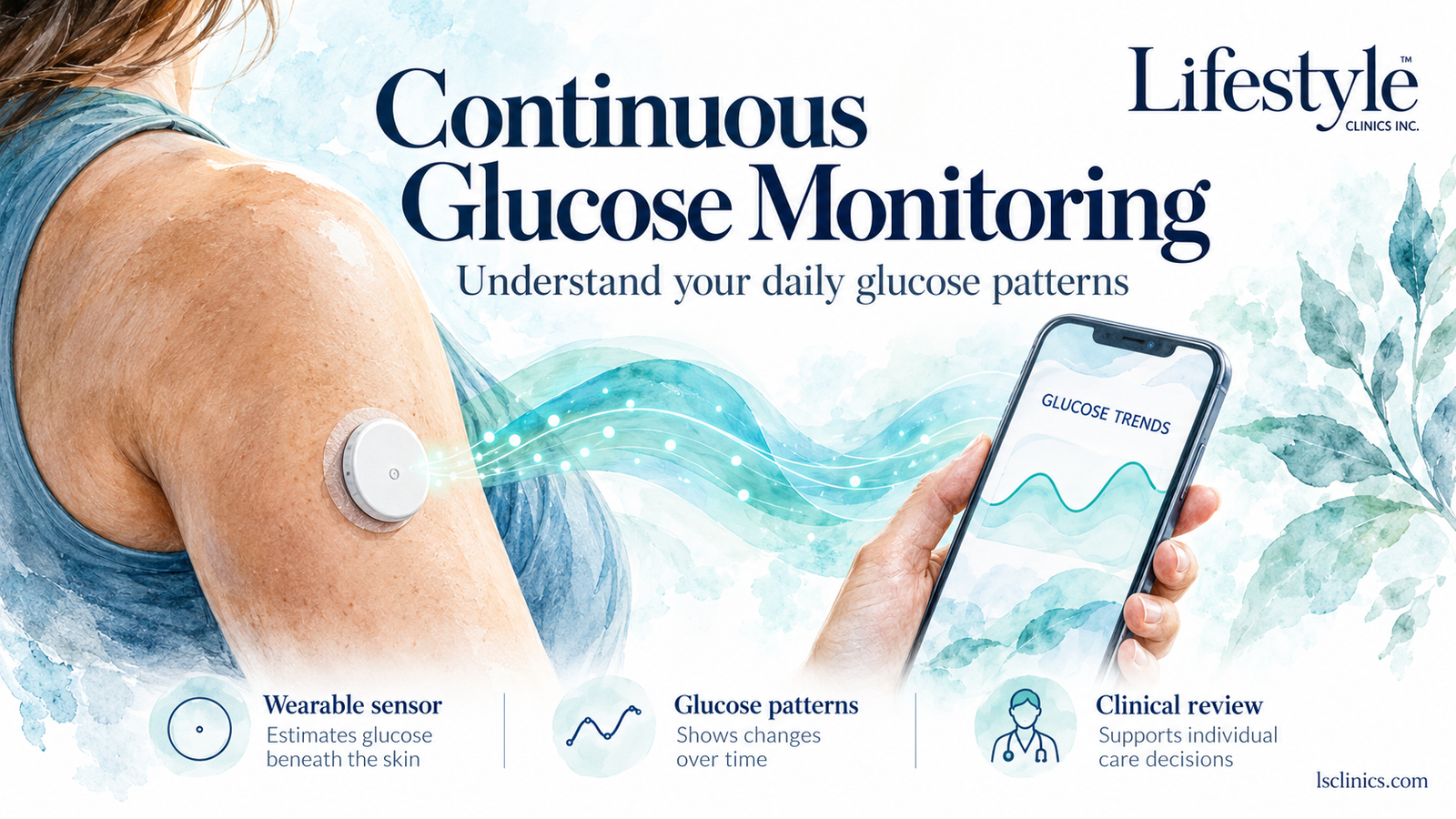
A CGM uses a small sensor to estimate glucose in interstitial fluid, the fluid surrounding cells beneath the skin. It does not directly sample blood in the same way as a finger-stick meter. Readings are collected repeatedly and displayed through a compatible receiver or application, depending on the system. [1]
This creates a record of glucose movement across the day and night. The information can reveal patterns that isolated checks may miss. Different systems have different features, including how readings are displayed, whether scanning is needed and which alerts are available.
Because sensor glucose and blood glucose are measured in different places, results may differ, particularly when glucose is changing rapidly. Patients need to understand this distinction before interpreting an unexpected reading or deciding whether additional checking is required. [2]
Who May Benefit From CGM Assessment
CGM can be particularly useful for people with type 1 diabetes, people with type 2 diabetes using insulin and those experiencing difficulties understanding their glucose patterns. The decision should reflect the person’s treatment, risk of low glucose and ability to use the information. [3]
Some people need ongoing monitoring, while others may be assessed using a shorter period of recorded data. The purpose should be clear before selecting a system. Questions might concern overnight patterns, glucose after meals or the response to a treatment change.
Searching for continuous glucose monitoring services near me should therefore begin with a clinical discussion. A device chosen for another person may have different features or indications. Age, pregnancy, other conditions and the level of support required can all influence the choice.
Your usual environment can influence what support is practical. A person working shifts may need help organising checks around changing sleep and meal times, while someone relying on a caregiver may need shared instructions. Explain these circumstances during assessment. The discussion can then focus on a monitoring arrangement that fits the day you actually live and on the specific questions you want the clinician to review during the next scheduled appointment.
What to Ask About a Monitoring Service
A useful service discussion covers more than obtaining a sensor. Ask who will assess suitability, explain the device and review the resulting information. Confirm whether the appointment includes setup, training or report interpretation, and which arrangements are available at your chosen location.
Practical details matter. Check whether you need a compatible smartphone or separate receiver, how replacement supplies are obtained and whom to contact if the sensor stops working. Ask about consultation charges and ongoing device costs before committing to a plan.
When comparing continuous glucose monitoring services near me, consider how the information will become part of continuing care. The essential question is what clinical decision the monitoring is intended to support and when that decision will be reviewed.
Personal and Professional Monitoring Options
Personal CGM systems provide information for the individual using the device, according to its features. Professional CGM is generally arranged through a healthcare service for a defined period, with the data reviewed by a clinician. Depending on the system, readings may be visible during wear or assessed afterwards.
The distinction matters when booking. Ask whether the proposed arrangement is intended to support everyday decisions or gather information for a later clinical review. Confirm which parts of the process you will manage yourself and what help is available.
Patients should also establish whether monitoring will be ongoing or repeated only when a specific question arises. The appropriate approach depends on the purpose, treatment and circumstances. [4]
Discussing CGM Within the LS Clinics Approach
LS Clinics traces its origins to a small practice established in California in 1990. It describes an international presence and operates under Medical PLC Holdings Group. Its philosophy considers relationships between daily habits, hormonal function and the factors influencing health. [5]
Within diabetes care, this provides a context for discussing food choices, physical activity and relevant medical findings together. CGM information can become one part of that discussion when clinically appropriate. The individual consultation determines which questions need assessment and which monitoring method is suitable.
The clinic’s broader interest in hormones should lead to focused clinical questions. Additional investigations should follow symptoms, examination findings or other indications. Wearing a glucose sensor does not automatically establish the need for extensive hormonal testing.
Five Stages for Discussing Monitoring and Treatment
LS Clinics describes five stages of care: a medical interview, investigations, diagnosis, treatment and follow-up. Patients can use this framework to organise questions about monitoring and understand how the information might influence their plan.
Medical Interview
The medical interview establishes your history, current treatment and reasons for seeking assessment. Explain when diabetes was diagnosed, which medicines you take and what concerns you have about your glucose. Bring information about previous monitoring, including any episodes of low glucose.
Describe your usual routine. Meals, shift work, travel and activity can help explain the circumstances around recorded changes. Mention whether eyesight, dexterity, language or confidence with technology affects how comfortably you could use a device.
Investigations
Investigations should address questions arising from the history and examination. Existing glucose records and laboratory reports may answer some questions, while others require additional assessment. The clinician can consider whether CGM would provide useful information alongside appropriate tests.
Ask what the monitoring period is intended to clarify. Establish which activities or symptoms to record and when the results will be reviewed. Clear instructions help ensure that information collected during ordinary life can be interpreted in context.
Diagnosis
Diagnosis connects the history, examination and relevant investigations. CGM patterns need clinical interpretation and should not be treated as a diagnosis by themselves. The discussion should explain the type of diabetes, current priorities and any uncertainty requiring further assessment.
If sensor readings differ from symptoms or other measurements, raise the discrepancy. The clinician can determine whether device factors, timing or another concern requires investigation before conclusions are drawn.
Treatment
Treatment recommendations should reflect the diagnosis and individual needs. Monitoring may inform discussions about food choices, activity or medicines, but it does not replace treatment. Patients should understand which decisions they can make under their agreed plan and which require professional advice.
If the prescription changes, request clear instructions about what changes and how the response will be assessed. A graph is most useful when it helps answer a clinical question and supports an understandable next step.
Follow Up
Follow-up considers the recorded patterns alongside symptoms, treatment response and the practical experience of wearing the device. The review should identify what has been learned, what remains uncertain and whether the existing plan needs adjustment.
For patients comparing continuous glucose monitoring services near me, ask how appointments and data sharing are arranged. Confirming these details helps establish a continuing relationship between the patient and the treating clinician.
Understanding the Main Parts of a CGM Report
Current Readings and Trend Arrows
A current reading estimates glucose at that moment. A trend arrow indicates whether glucose is rising, falling or relatively steady, according to the device’s definitions. The arrow adds context, but the appropriate response depends on the person’s agreed treatment plan. [2]
Ask the clinician how to interpret arrows on your chosen system. Instructions developed for a different device or treatment regimen may not apply. Avoid repeatedly changing medication in response to individual arrows without an agreed method.
Time in Range
Time in range describes the proportion of recorded time spent within a target glucose range. Reports may also show time above and below that range. These measures help reveal patterns that an average alone cannot describe. [6]
For many nonpregnant adults with diabetes, a commonly used range is 70 to 180 mg/dL. Targets differ, particularly in pregnancy or when avoiding low glucose is a major concern. The treating clinician should explain the range and goals appropriate for you. [7]
Daily Patterns and Estimated Averages
Daily reports can highlight recurring changes around meals, sleep or activity. The clinician may also consider average glucose, variability and the glucose management indicator, or GMI. GMI is calculated from sensor data and is not always equivalent to laboratory HbA1c. [7]
The quality of interpretation depends partly on whether sufficient usable data were recorded. Missing readings and unusual days should be discussed. The aim is to understand a pattern that can inform care, rather than judge the entire plan from one isolated result.
Some reports combine information from several days into a standardised visual summary. Ask the clinician to explain the recurring features and identify which findings matter for your care. A report should leave you understanding the clinical question, the recommendation and the arrangements for assessing its effect. [7]
How CGM Relates to HbA1c
HbA1c remains an established tool for assessing average blood glucose over approximately three months. CGM provides information about variation during a monitored period. Together, these measurements can answer different questions about longer-term management and everyday glucose patterns. [8]
Some medical conditions affect HbA1c reliability, including certain changes in red blood cells or haemoglobin. A discrepancy between laboratory results and sensor information needs clinical interpretation. The doctor can decide which measurements are most useful for the circumstances. [8]
Patients should understand why each test is being used. A sensor report does not automatically replace established investigations, and a calculated estimate should not be treated as interchangeable with every laboratory result.
Food Choices and Physical Activity in Context
LS Clinics emphasises dietary and lifestyle changes within diabetes care. CGM can provide material for discussing how an ordinary routine relates to glucose patterns. Relevant notes may include meal timing, portions, activity or symptoms when the treating clinician requests them.
An isolated rise after food should be interpreted within the wider clinical picture. Meal recommendations need to account for nutrition, medicines and other health conditions. A suitable plan should remain practical for the patient’s household, budget and preferences. [9]
Physical activity can affect glucose, including the possibility of low readings in people using insulin or certain other medicines. Ask how monitoring should fit changes in activity and follow the agreed instructions. LS Clinics also describes an interest in walking clubs, which patients can enquire about. [10]
For example, a recurring rise after breakfast may prompt a discussion of meal timing, portions and prescribed treatment. Record the context requested by the clinician so that comparable days can be considered. If a change is agreed, ask how long to follow it before the response is reviewed.
Device Education and Safe Everyday Use
CGM education should explain application, normal operation, alerts, troubleshooting and how to obtain help. The American Diabetes Association recommends initial and ongoing training suited to the person and their caregivers. Data sharing and interpretation should form part of that education. [4]
Follow the instructions for the exact device supplied. Application sites, replacement intervals, warm-up periods and compatibility vary. Ask about skin irritation, a loose sensor and precautions before medical imaging or other procedures. Device instructions should determine what is appropriate. [11]
A finger-stick meter remains important when confirmation is required. If symptoms and sensor readings do not match, follow the manufacturer’s instructions and your clinical plan for checking blood glucose. Severe symptoms require urgent medical attention, even if a displayed reading seems reassuring. [12]
Agreeing on a Response Plan
Before monitoring begins, ask for an explanation of what to do when readings fall outside your agreed range. The plan should address situations requiring confirmation, contact with the treating service or urgent assistance. Instructions need to fit the person’s treatment and the chosen device.
A useful discussion also establishes who will respond to alerts when another person helps with care. Decide what information they should receive and whether they understand the instructions. Sharing access should reflect the patient’s preferences and practical support needs.
Review the plan when medicines, routines or health circumstances change. If an instruction is unclear, request clarification before relying on it during an unexpected reading or symptom.
Medicines and Minimum Dose Treatment
LS Clinics describes its philosophy as “minimum dose treatment,” with attention to interactions between hormones. Patients should ask how this applies to their diagnosis and which findings will determine whether a prescription is effective.
The appropriate dose must meet clinical needs safely. Type 1 diabetes requires insulin, which monitoring, diet and activity cannot replace. Some people with type 2 diabetes also require insulin or other medication. Changes should follow clinical assessment and an agreed treatment plan. [13] [14]
Some people with type 2 diabetes can achieve remission, generally defined as HbA1c below 6.5% for at least three months without usual glucose-lowering medication. Remission requires continued monitoring and is not a guaranteed permanent cure. CGM graphs alone do not establish remission. [15]
Continuing Support and Realistic Expectations
The benefit of monitoring depends on appropriate use, interpretation and review. Discuss whether the device is comfortable, whether alerts are understandable and whether managing the technology has introduced difficulties. These experiences can influence decisions about continuing or changing the approach.
LS Clinics describes lectures, seminars and workshops internationally and online. Patients can enquire about relevant education and current availability. Its diabetes testimonials describe experiences of tailored care and supportive staff, while outcomes remain individual.
If you are searching for continuous glucose monitoring services near me, ask how general education connects with your own clinical instructions. Confirm who will review the report, how questions are handled and what follow-up is expected after a change.
Confirm who can access shared information and when reports are actually reviewed. Ask how to withdraw sharing access if your preferences change. These practical arrangements help distinguish the ability to send readings from a specific agreement about clinical review and responding to concerns.
Preparing for the Consultation
Bring recent laboratory reports, your medication and supplement list, and available glucose records. If you already use CGM, tell the clinic which system you have and ask how to provide the information needed for review.
Write down what you hope monitoring will clarify. You may have questions about overnight readings, symptoms, meal patterns or changing treatment requirements. A specific concern gives the assessment a clearer purpose.
Discuss costs in practical terms, including consultations, sensors, compatible equipment and replacement supplies. Confirm what the quoted arrangement includes and whether additional reviews are charged separately. Availability and support should be checked for your chosen consultation location.
Plan how to maintain monitoring when travelling or obtaining replacement supplies. Ask what backup checks are appropriate if the sensor or receiving device cannot be used. Agreeing on these arrangements helps you understand how the existing diabetes plan should continue during an interruption.
Frequently Asked Questions
Does CGM Measure Blood Directly
CGM estimates glucose in interstitial fluid beneath the skin. A finger-stick meter measures glucose from a blood sample. The difference helps explain why readings may not match exactly, particularly during rapid changes.
Will I Still Need Finger Stick Tests
Some situations require confirmation with a blood glucose meter. Follow the instructions for your device and the plan agreed with your clinician. Ask specifically what to do when symptoms differ from sensor readings.
Does Every Device Have Glucose Alarms
No. Features differ between systems. Some devices provide alerts, while others are not designed for warning about dangerous lows. Confirm that the chosen device’s features match your treatment and monitoring needs. [16]
Can CGM Replace My Diabetes Medicines
No. CGM provides information and does not replace necessary treatment. Type 1 diabetes requires insulin. Medication requirements in type 2 diabetes vary and should be assessed by the treating doctor.
Is CGM Suitable for Everyone With Type 2 Diabetes
Suitability depends on the person’s treatment, clinical questions and circumstances. The clinician should explain whether ongoing or periodic monitoring would help and how the findings would influence care.
Does a Better Graph Prove Diabetes Remission
No. Remission in type 2 diabetes has specific clinical criteria and requires continued review. Improved readings should be discussed with the clinician before any changes are made to prescribed treatment.
Can Someone Else Receive My Readings
Some systems allow sharing with a caregiver or clinician. Confirm compatibility, consent and the arrangements for reviewing information. Sharing data does not automatically mean someone is continuously watching or responding to it.
Can I Use Any Smartphone
Compatibility depends on the device, application and operating system. Check the manufacturer’s current requirements before purchasing equipment. Ask whether a compatible separate receiver is available if smartphone use is unsuitable.
Should I Change Treatment After Every Alert
Respond according to your agreed clinical plan and device instructions. Alerts need context, and treatment decisions may require confirmation. Ask for practical instructions before starting rather than improvising when a notification appears.
What Should I Confirm With LS Clinics
Ask about CGM assessment, device provision, setup, education and report-review arrangements at your selected location. Explain whether you already own a sensor and confirm appointment details, fees and preparation requirements.
Request a Diabetes Consultation at LS Clinics
Patients can request a consultation by providing their name, mobile number, email address, selected health concern and preferred appointment date. Mention your interest in CGM so the clinic can clarify the appropriate appointment arrangements.
The listed Asia headquarters is Al-Razi Building #10, Dubai Healthcare City, Dubai. Enquiries can be directed to +92 321 786 9227, +92 321 970 0700, or info@lsclinics.com. [5]
For people considering continuous glucose monitoring services near me, an individual assessment is the starting point. Discuss your existing results, the question monitoring should answer and how findings will be reviewed within continuing diabetes care.