Blood Sugar Monitoring Services for Personalized Diabetes Care
Searching for blood sugar monitoring services near me often begins with a practical concern. Your readings may be changing unexpectedly, a recent test may have raised questions, or you may want clearer support with an existing diabetes diagnosis. Useful monitoring connects those concerns with an assessment, an understandable plan and regular clinical review.
LS Clinics places diabetes care within a broader approach to endocrinology, lifestyle and metabolic health. Its stated philosophy considers how daily habits, hormonal function and underlying health conditions interact. For patients seeking monitoring advice, this provides a starting point for discussing their symptoms, current treatment and individual needs.
Blood sugar testing can involve a home glucose meter, laboratory investigations or continuous glucose monitoring. Each provides different information. A consultation can help establish which approach is appropriate and how results should inform ongoing care. Patients should confirm the specific testing, device support and appointment arrangements available when contacting LS Clinics.
Why Blood Sugar Monitoring Matters
Blood glucose changes during the day in response to food, physical activity, medication and other influences. Monitoring helps identify patterns that a single appointment reading might miss. The value comes from understanding what the results mean and having an agreed response when glucose moves outside the target set by your clinician.
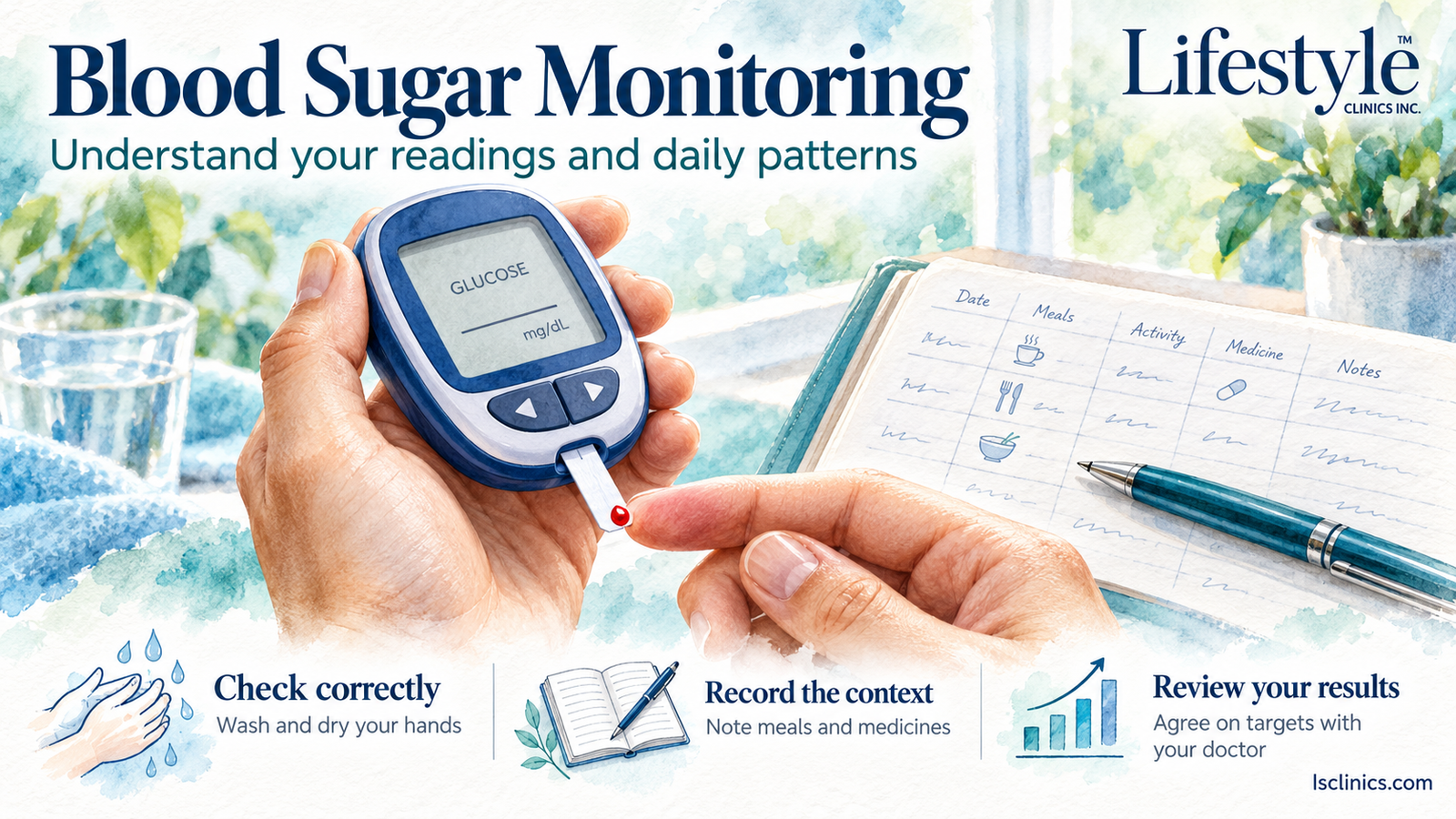
A result also needs context. A measurement taken before breakfast answers a different question from one taken after a meal. Recording when you ate, took medication or exercised can make your results easier to interpret. An isolated reading should therefore be discussed alongside the surrounding circumstances rather than treated as a complete account of your health.
Monitoring should serve a clear purpose. That purpose might be assessing a treatment change, investigating suspected low glucose or reviewing whether an existing plan is working. Ask your doctor what information is needed, how long to collect it and when the results will be reviewed.
Understanding Different Monitoring Options
Finger Prick Blood Glucose Testing
A glucose meter uses a small blood sample, usually from a fingertip, to estimate the glucose level at that moment. It can be useful for checking specific times identified in your treatment plan. Training should cover the meter, compatible strips and what to do with the result. The appropriate testing frequency depends on your clinical circumstances.
Laboratory Testing and HbA1c
Laboratory glucose tests help clinicians assess and diagnose diabetes. HbA1c provides information about average glucose over approximately three months. These investigations complement daily readings because they address different clinical questions. Home meters should not be used to diagnose diabetes independently; diagnosis requires appropriate clinical testing and interpretation.
Continuous Glucose Monitoring
A continuous glucose monitor, or CGM, uses a sensor to estimate glucose in the fluid between cells. It provides a series of measurements that can reveal changes across the day and night. Displays, alerts and data sharing depend on the device. Patients considering CGM should discuss suitability, practical requirements and access to backup blood glucose testing.
Choosing a Monitoring Schedule That Fits Your Treatment
People comparing blood sugar monitoring services near me should expect an individual discussion about testing frequency. Someone using insulin may need a different schedule from someone managing type 2 diabetes with other treatment. Pregnancy, previous low glucose and changes in health can also affect the plan. More frequent testing is useful when it answers a clinical question.
Ask for instructions that fit your actual routine. Shift work, school, travel and caring responsibilities can affect when testing is practical. Explain any difficulty with supplies, eyesight, dexterity or remembering checks. A plan that you can follow consistently gives the treating doctor more useful information than an ambitious schedule that quickly becomes unmanageable.
Understanding Your Personal Blood Sugar Targets
Targets should be agreed with your treating clinician. For many adults with diabetes who are not pregnant, commonly used targets are 80 to 130 mg/dL before meals and below 180 mg/dL one to two hours after a meal begins. Your goals may differ according to your health, age, treatment and risk of hypoglycaemia. These figures are management targets, not instructions for diagnosing yourself.
Check which units appear on your meter and reports. Some devices show mg/dL, while others use mmol/L. Numbers in these systems are not interchangeable. If you receive results from different devices or laboratories, show the original reports to your clinician so the units and timing can be checked before comparisons are made.
The LS Clinics Approach to Diabetes and Metabolic Health
LS Clinics traces its origins to a small practice established in California in 1990. It describes an international presence and operates under Medical PLC Holdings Group. Its approach brings lifestyle considerations into an endocrinology practice, with attention to the relationship between hormonal function and everyday health. Its stated focus includes the interaction of multiple hormones, with treatment decisions based on individual clinical findings.
Within diabetes care, this perspective creates space to discuss eating patterns, activity and the practical demands of treatment. It also gives patients an opportunity to raise concerns that may need further investigation. A broader assessment should remain directed by the medical history and clinical findings, with the treating doctor deciding which investigations are justified.
For patients searching for blood sugar monitoring services near me, the relevant question is how monitoring information will support their care. Discuss who will interpret results, what follow-up involves and how recommendations will be explained. Clear expectations help patients understand the purpose of testing before committing to a monitoring arrangement.
Five Stages of Clinical Assessment and Review
Medical Interview
The clinic describes a pathway beginning with a medical interview. This is an opportunity to explain symptoms, previous diagnoses, medicines and concerns about glucose readings. Bring examples of your usual meals and daily routine. Mention missed doses, recent illness or practical difficulties honestly so the discussion reflects what is happening outside the consultation room.
Investigations
The next stage involves investigations selected according to the assessment. These may include appropriate laboratory testing and discussion of existing home readings. Ask what each investigation is intended to clarify and whether preparation is required. Fasting instructions depend on the particular test; do not assume that every diabetes appointment requires an empty stomach.
Diagnosis
The doctor then interprets the findings alongside your history. This may involve establishing a diagnosis or reviewing an existing one. Symptoms and home readings can inform the discussion, while formal diagnosis depends on appropriate clinical evidence. Understanding the type of diabetes matters because treatment needs and monitoring priorities can differ substantially between patients.
Treatment
Treatment recommendations should respond to the diagnosis and individual findings. LS Clinics describes its philosophy as “minimum dose treatment.” Patients can ask how that principle applies to their prescriptions and monitoring plan. Any change in medication should have a clinical reason, clear instructions and a way to assess whether the change is safe and effective.
Follow Up
Follow-up provides an opportunity to review the response, discuss difficulties and reconsider treatment. Ask when to return, which readings to bring and how to obtain advice between appointments. A scheduled review helps turn testing into a continuing conversation about care rather than an accumulation of numbers without explanation.
Making Home Testing More Reliable
Correct technique matters. Follow the instructions supplied with your meter and strips, including any recommended control solution checks. Use compatible, unexpired strips and store them as directed. Heat, moisture and poor storage can affect performance. Ask a healthcare professional to watch you complete a test if you are unsure about your technique.
Wash and dry your hands before testing. Residues from food or other substances can interfere with the sample, while wet hands can dilute it. Use a new sterile lancet as instructed, never share your lancing device and ask about safe disposal of used sharps. Accurate testing begins with these ordinary details.
If testing is painful, difficult to read or hard to fit around work, explain the problem during review. Ask whether another suitable meter, a demonstration or a different recording method would help. People who need assistance can also discuss whether a trusted relative or carer should learn the agreed procedure. Any shared involvement should respect the patient’s preferences and privacy. Ask for the plan in writing if you find verbal instructions difficult to remember afterwards.
If a result seems inconsistent with how you feel, follow your device instructions and the response plan agreed with your clinician. Do not dismiss significant symptoms because a device displays an apparently reassuring number. Ask when a repeat check, alternative testing or medical assessment is needed.
Turning Readings Into a Useful Record
A useful record includes the glucose result, date, time and relationship to meals. Brief notes about medication, activity or symptoms can help explain unusual patterns. A paper notebook may be sufficient; a compatible meter download or application can also be useful. Choose a method you understand and can maintain.
For example, a record showing the date, breakfast time, medicine time and the agreed glucose checks gives a reviewer something concrete to discuss. If the same pattern appears repeatedly, the doctor can decide whether further assessment or a treatment change is needed. This is more useful than sending an unexplained photograph of one reading and expecting a complete decision about the rest of the day.
Bring the complete record, including unexpected readings. Selecting only reassuring numbers can hide the very pattern that needs attention. If you missed checks, explain why. A clinician can work with an honest account of the difficulties and help simplify the plan when appropriate.
For digital sharing, clarify who can access your information and when someone will review it. Sending readings does not automatically mean a clinician is watching continuously. Agree on the contact route for routine questions and the action required for urgent concerns before relying on an application or messaging arrangement.
Using Monitoring to Support Food and Lifestyle Changes
LS Clinics emphasizes dietary and lifestyle changes within diabetes management. Monitoring can support that discussion by helping patients describe what happens around meals and activity. It should be used alongside an appropriate eating plan, prescribed treatment and clinical review.
Carbohydrate amounts, portion sizes and the overall composition of a meal can influence glucose responses. A practical eating plan should reflect nutritional needs, preferences, medicines and daily routines. Your clinician or dietitian can help you interpret patterns without drawing broad conclusions about a food from a single result.
Physical activity can support diabetes management, but advice should account for your health and medication. People at risk of low glucose may need specific instructions around exercise. Sleep, smoking and emotional wellbeing also deserve attention within a sustainable care plan. Raise difficulties early so recommendations can be adapted to your circumstances.
The clinic also describes lectures, seminars and workshops internationally and online, together with an interest in walking clubs. Ask which educational activities are currently available and relevant to your needs. Learning how to apply a plan between appointments can be as important as understanding it during the consultation.
Medication Needs and Type 2 Diabetes Remission
Monitoring supports treatment decisions; it does not replace necessary treatment. Type 1 diabetes requires insulin, and dietary or lifestyle changes cannot substitute for it. Some people with type 2 diabetes also need insulin or other medicines. Continue prescribed treatment unless your treating doctor provides a specific adjustment plan.
Include nonprescription products and supplements in your medicine list. If a treatment has recently changed, note when it started and bring the relevant prescription. This helps the doctor review readings against the correct treatment history and check whether device instructions mention substances that could affect accuracy.
Some people with type 2 diabetes achieve remission. The usual definition is HbA1c below 6.5% for at least three months without usual glucose-lowering medication. Remission requires continued monitoring because glucose can rise again. It should not be presented as a guaranteed outcome or permanent cure, and medication should not be stopped simply to test whether remission has occurred.
HbA1c remains an established assessment tool, although certain conditions affecting haemoglobin or red blood cells can make it less reliable. If laboratory results and home readings appear inconsistent, discuss the difference with your doctor. The appropriate combination of tests depends on the clinical situation.
Knowing When to Seek Prompt Medical Help
Ask for a written plan covering low readings, high readings and illness. Low glucose can cause shaking, sweating, dizziness or confusion, and some people have few warning symptoms. Severe confusion, seizures or loss of consciousness require emergency assistance. Family members or carers should understand the emergency instructions relevant to your treatment.
Vomiting, abdominal pain, deep or difficult breathing, marked thirst or increasing drowsiness can signal a serious problem in someone with diabetes. Diabetic ketoacidosis is a medical emergency. Seek urgent assessment when these symptoms occur, following your emergency plan rather than waiting for a routine appointment or an online reply.
Monitoring arrangements should make these distinctions clear. Routine reviews address longer-term patterns, while urgent symptoms require timely action. Before leaving a consultation, confirm which situations need an immediate call, emergency care or an earlier appointment. Keep those instructions somewhere you and anyone helping with your care can find them.
Continuing Care Beyond Glucose Readings
Diabetes care also involves attention to blood pressure, kidney health, eyes and feet. The appropriate review schedule depends on your condition and previous findings. Ask how glucose monitoring fits alongside these other assessments so that apparently improved readings do not lead to missed follow-up elsewhere in your care.
LS Clinics describes patient testimonials that highlight tailored care and supportive staff. These accounts can give an impression of individual experiences, but they cannot predict another patient’s outcome. Your progress should be assessed against your own clinical needs, agreed goals and response over time.
Comparing Blood Sugar Monitoring Services Near Me
When choosing a service, ask what is included in the consultation and what must be arranged separately. This may involve laboratory testing, meter education, CGM assessment or a follow-up appointment. Confirm availability directly with LS Clinics rather than assuming every monitoring option is supplied at every location.
Discuss the full ongoing cost, including any strips, lancets, sensors or replacement supplies you may need. Ask whether your existing device can be reviewed and whether you should bring a printed record. Practical clarity helps you compare arrangements on the basis of the support you will actually receive.
Convenience also matters. Confirm the consultation location, appointment time and process for follow-up. If you are travelling, ask whether investigations need to be completed beforehand. A nearby service is useful when its arrangements allow you to maintain the plan and attend the reviews your doctor recommends.
Frequently Asked Questions
Who should discuss blood sugar monitoring with a doctor
People with diagnosed diabetes, symptoms requiring assessment or questions about previous test results can seek advice. Monitoring needs vary. The doctor should explain whether home testing is appropriate and how the information would change your care.
Can a home glucose meter diagnose diabetes
No. A home meter is intended for monitoring and cannot independently establish the diagnosis. Appropriate laboratory testing and clinical interpretation are needed. Bring concerning readings to a medical appointment instead of making a diagnosis from isolated results.
Does everyone need to check glucose every day
No single schedule suits everyone. Testing frequency depends on treatment, safety concerns and the purpose of monitoring. Ask which checks are necessary for you and when the schedule should be reconsidered. Avoid copying another person’s routine without advice.
Is CGM always better than a finger prick meter
The appropriate choice depends on individual needs, device suitability and access. CGM offers information about trends, while a blood glucose meter provides a measurement at a particular time. People using CGM also need access to backup blood glucose testing.
Why do meal times matter when recording readings
A reading before eating and one taken after eating represent different points in the glucose response. Recording the time relative to the start of a meal makes comparisons more useful and helps the clinician interpret your results consistently.
Can improved readings mean I should stop medication
Improved results may show that the current treatment is working. They are a reason to review the plan with your doctor. Do not stop insulin or other prescribed medicine without specific instructions, even when several readings look reassuring.
Does monitoring guarantee diabetes remission
No. Monitoring provides information; remission depends on the type of diabetes and individual circumstances. Some people with type 2 diabetes achieve remission, but continued clinical assessment remains necessary because blood glucose can increase again.
What should I bring to my first appointment
Bring recent laboratory reports, your medicine list and available glucose records. Your meter, strip packaging or sensor details may also help. Write down symptoms and questions beforehand so the consultation can address the problems that matter most to you.
How can I find blood sugar monitoring services near me
Contact the clinic to confirm its consultation location, appointment availability and relevant monitoring support. Ask what the initial assessment includes, which supplies you need and how results will be reviewed. These details make comparisons more meaningful than location alone.
Can I contact LS Clinics about monitoring options
Yes. You can request a diabetes consultation services Near Me and ask which monitoring assessments and support are available. Explain whether you already have diabetes, use a device or need advice about recent results so the appointment request reflects your concern.
Requesting a Diabetes Consultation at LS Clinics
Patients can request a consultation by providing their name, mobile number, email address, selected health concern and preferred appointment date. Mention any current monitoring device and ask whether reports or readings should be submitted before the visit.
The clinic lists its Asia headquarters at Al-Razi Building #10, Dubai Healthcare City, Dubai. Enquiries can be directed to +92 321 786 9227, +92 321 970 0700, or info@lsclinics.com. Confirm the appropriate consultation location when booking.
If your search for blood sugar monitoring services near me has brought you to LS Clinics, contact the team to discuss an individual assessment. The appointment can establish your clinical priorities and clarify how monitoring, treatment and follow-up should work together in your continuing diabetes care.